
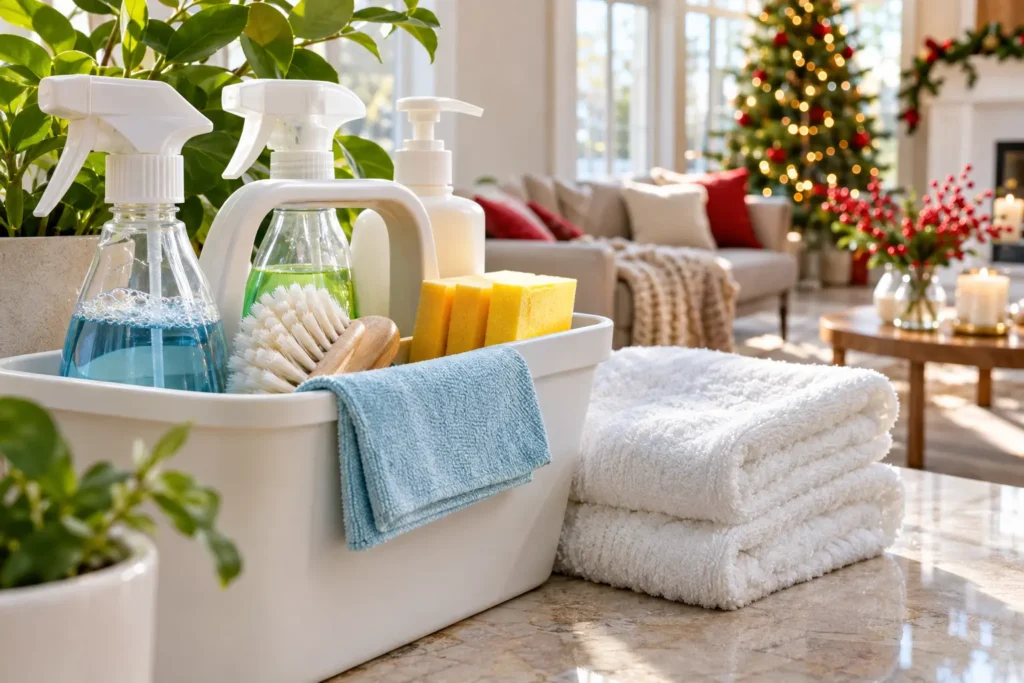
Holiday family visits become much easier when cleanliness is maintained through small, repeatable actions rather than a stressful deep-cleaning session at the last minute. A professional approach is to create a daily reset that controls clutter, removes high-traffic debris, and keeps the rooms guests are most likely to use consistently presentable.
The goal is not to clean every surface every day. It is to build habits that prevent mess from accumulating. With a short routine, the final preparation before relatives arrive can focus on fresh details and hospitality instead of recovering the entire home.
Build a daily cleaning system around guest visibility
Not every area deserves equal attention when time is limited. Prioritize the spaces that shape a visitor’s first impression and receive the most use: the entryway, living room, kitchen, dining area, guest bathroom, and the path connecting them. This visibility-first method produces a noticeably cleaner home in less time than cleaning room by room without a plan.
- Entryway: Clear shoes, bags, coats, mail, and delivery packaging from the floor and nearby surfaces.
- Living room: Return cushions, fold throws, remove cups, and clear visible dust or crumbs from tables.
- Kitchen: Keep the sink empty or nearly empty, wipe counters, and address food residue before it dries.
- Dining area: Clear the table after every meal and remove crumbs from chairs and the floor.
- Guest bathroom: Wipe the sink and faucet, check the mirror, and replace the hand towel when needed.
This simple prioritization is particularly useful during the busy weeks leading up to seasonal gatherings, when work, shopping, cooking, and family schedules compete for attention.
Use a 10-minute reset after the busiest part of the day
A short reset is more sustainable than waiting until the weekend. Choose a consistent trigger, such as after dinner or before the household settles for the evening. Set a timer for ten minutes and complete the same sequence every day.
- Collect dishes, glasses, and food containers from the living and dining areas.
- Return misplaced items to their designated homes.
- Put laundry, toys, papers, and personal belongings into their appropriate baskets, drawers, or shelves.
- Wipe kitchen worktops and the dining table with a suitable cloth and product.
- Sweep or vacuum the most visible crumbs in the kitchen and entryway.
- Inspect the guest bathroom and remove any obvious marks or clutter.
Do not spend the entire ten minutes perfecting one surface. The value comes from covering the whole high-visibility zone and stopping when the timer ends. Consistency produces better results than occasional bursts of effort.
Prevent clutter with a one-touch rule
Many daily cleaning problems are actually organization problems. The one-touch rule reduces repeated handling: when you pick up an item, take it directly to its permanent location whenever possible. Mail goes to a designated sorting point, shoes go onto a rack, and used mugs go to the kitchen rather than onto another temporary surface.
To make this habit practical, position simple collection points where clutter naturally forms. A small basket near the stairs can hold items that belong upstairs, while a tray near the entrance can contain keys and other essentials. Empty these collection points during the evening reset so they do not become hidden piles.
Use closed storage selectively for visual calm, but avoid filling drawers or cupboards with unsorted items. A hidden mess becomes a larger task later, especially before guests need access to coats, seating, or the bathroom.
Clean spills and food residue immediately
Fresh residue generally requires less time and less product than dried residue. Make immediate spot cleaning a household standard for coffee, sauces, grease, toothpaste, and muddy marks. Keep a small supply of appropriate microfiber cloths and surface-safe cleaner accessible, while storing products securely away from children and pets.
Use separate cloths or clearly defined cloth colors for the kitchen, bathroom, and general surfaces. This reduces cross-contamination and prevents bathroom products from being used around food preparation areas. Always follow the manufacturer’s instructions for the surface and cleaning product, and never mix chemical products.
For floors, remove grit promptly in entry and dining areas. Fine particles act as abrasives under shoes and can make floors appear dull over time. A quick sweep or vacuum of the highest-traffic strip is often more efficient than repeatedly cleaning the entire floor.
Apply the top-to-bottom, clean-to-dirty sequence
Efficient cleaning depends on order. Dust and debris fall downward, so begin with higher surfaces and finish with the floor. Also work from cleaner areas toward dirtier ones, keeping the bathroom and kitchen tasks appropriately separated.
- Open curtains or blinds and improve ventilation when conditions allow.
- Remove clutter from the room before wiping or dusting.
- Dust shelves, lamps, tables, and other elevated surfaces.
- Clean marks from frequently touched surfaces such as handles and switches.
- Wipe the floor or vacuum after loose debris has settled.
This sequence avoids rework. It also makes a short routine feel more effective because each action prepares the next one.
Maintain a daily kitchen baseline
The kitchen often determines whether a home feels ready for visitors. A useful daily baseline has three parts: control the dishes, reset the worktops, and manage food waste. If possible, run or unload the dishwasher at a predictable time, wash essential items before bed, and wipe the sink after the final meal.
Keep counters limited to the appliances and tools used regularly. Fewer objects on the worktop mean fewer obstacles when wiping and fewer places for crumbs to collect. Empty the food-waste container before odors develop, especially when holiday cooking increases the amount of organic waste.
Do not overlook cabinet handles, refrigerator handles, and the area immediately around the cooking zone. These small, high-contact details can be addressed in seconds during the normal counter wipe rather than added to a long pre-visit checklist.
Keep the guest bathroom visit-ready
A guest bathroom can be maintained in under five minutes when the daily baseline is clear. Wipe the sink and faucet, check the mirror for visible marks, keep the toilet area orderly, and replenish hand soap, toilet paper, and clean towels before supplies run low.
Store only necessary items on open surfaces. A clear counter is faster to wipe and gives visitors a stronger impression of care. A small daily inspection is also a practical way to identify leaks, empty dispensers, loose fixtures, or ventilation issues before family visits make them urgent.
Divide habits across the household
Cleaning habits are more reliable when they are assigned rather than assumed. Give each household member a clear, age-appropriate responsibility: clearing personal items, unloading the dishwasher, resetting cushions, sweeping the entryway, or checking supplies. Rotate less popular tasks if necessary, but keep ownership specific.
A visible checklist can help during busy seasonal periods. Keep it short enough to complete daily and separate essential actions from optional improvements. For example, clearing the sink may be essential, while polishing every decorative object is not. This distinction protects time and prevents perfectionism from undermining consistency.
Use a practical pre-visit finishing routine
On the day relatives arrive, use the habits already established rather than beginning with a full-home clean. Allow enough time for any damp surfaces or recently cleaned floors to dry safely, then complete the following sequence:
- Remove visible clutter from the entryway and main seating areas.
- Ventilate briefly if weather and air quality permit.
- Empty rubbish and food-waste containers.
- Wipe the kitchen and dining surfaces.
- Check the guest bathroom, towels, soap, and toilet paper.
- Vacuum or sweep the entry, kitchen, dining area, and visible walkways.
- Restore cushions, chairs, throws, and lighting to a comfortable arrangement.
Finish with a calm visual inspection from the doorway of each guest-facing room. This perspective reveals stray items, marks, and uneven arrangements more quickly than repeatedly looking at one surface up close.
Make the routine sustainable after the holidays
The most effective holiday cleaning habit is one that remains useful after visitors leave. Keep the same evening reset, one-touch rule, and high-traffic floor check throughout the year. Review the routine after a week: remove steps that add little value, clarify responsibilities, and move supplies closer to where they are used.
A consistently maintained home does not need to look untouched. It should feel orderly, hygienic, and ready for everyday life. By handling small tasks promptly and focusing effort where guests notice it most, you can welcome family with confidence while preserving time for the parts of the season that matter.

